Streamlining Ad Spend Invoice Collections
Discover how Gurgaon-based digital marketing firms can optimize their invoice collections and improve cash flow with clear payment terms and automated follow-ups.

Introduction to Efficient Invoice Collections
Managing monthly ad-spend budgets for clients can be complex, but ensuring timely payments from those clients is equally crucial. For a Gurgaon-based digital marketing firm, the challenge of collecting payments on time can directly impact the ability to deliver high-quality services and invest in new business opportunities. In this article, we'll delve into the specifics of streamlining invoice collections for digital marketing firms, focusing on the importance of clear payment terms, the benefits of automated follow-ups, and strategies for handling client excuses and disputes.
The Lifecycle of an Invoice
Understanding the typical lifecycle of an invoice is essential for identifying bottlenecks and areas for improvement in the payment collection process. The lifecycle can be broken down into several stages:
| Stage | Description | Average Timeline | Actions |
|---|---|---|---|
| Draft | Creating the invoice | 1-3 days | Review for accuracy, ensure all services are accounted for |
| Sent | Sending the invoice to the client | Immediate | Use email and WhatsApp for prompt delivery |
| Overdue | Payment not received by the due date | 7-14 days after due date | Automated follow-ups begin |
| Escalated | Multiple follow-ups have been sent | 14-30 days after due date | Personalized follow-ups, potential late fee application |
| Collected | Payment is received | Varies | Update records, consider feedback for future improvements |
Implementing Clear Payment Terms
Clear payment terms are the foundation of a streamlined invoice collection process. They provide a mutual understanding between the digital marketing firm and its clients regarding the payment schedule, methods, and any late fees associated with delayed payments. Establishing these terms from the outset helps prevent misunderstandings and facilitates smoother cash flow.
To set up clear payment terms, consider the following steps:
- Define Payment Milestones: For larger campaigns, break down payments into stages. For example, 25% upfront, 25% at campaign launch, 25% at midpoint, and 25% upon completion.
- Specify Payment Due Dates: Clearly state the number of days within which payment is expected. Consider shorter terms than Net 30 for smaller firms.
- Outline Accepted Payment Methods: Specify how clients can pay, such as bank transfer, UPI, etc.
- Establish a Late Payment Policy: Outline what happens if payment is not received on time. This could include a late fee or a temporary pause in services until payment is cleared.
Leveraging Automated Follow-ups
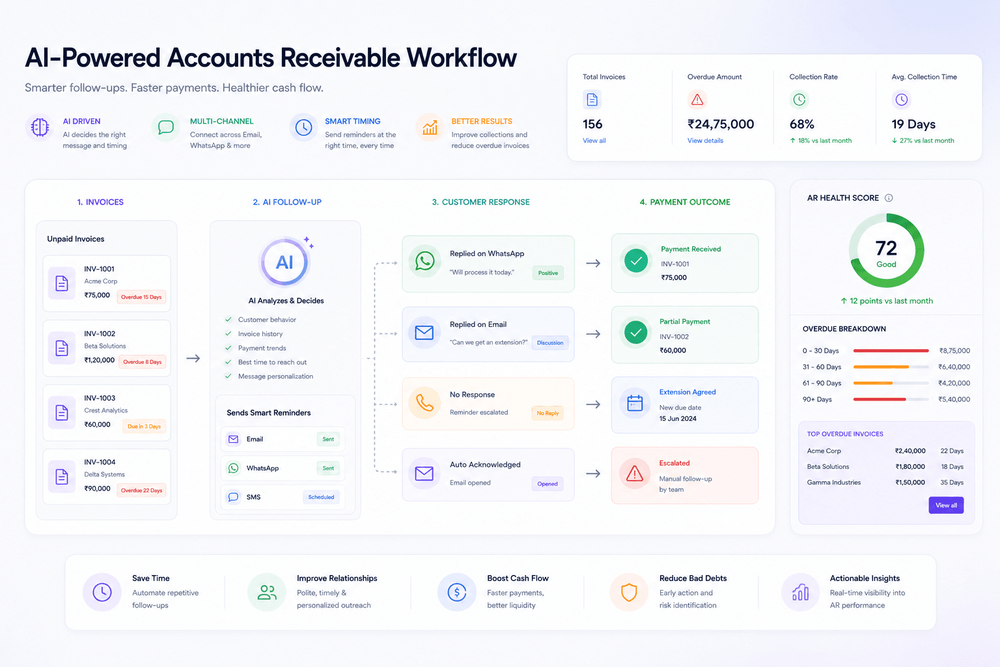
Automating the follow-up process can significantly reduce the time spent on chasing payments. Tools like Claro Flow can integrate with your accounting software, such as QuickBooks, to send polite and timely reminders to your clients.
The benefits of automated follow-ups include:
- Reduced Administrative Time: Automating follow-ups frees up your time to focus on high-value tasks.
- Improved Cash Flow: Timely reminders can lead to faster payments, improving your cash flow.
- Enhanced Client Relationships: Professional and polite reminders maintain a positive relationship with your clients.
Handling Client Excuses and Disputes
Despite clear payment terms and automated follow-ups, clients may still have excuses or disputes regarding payments. It's essential to handle these situations professionally and promptly.
Strategies for handling client excuses include:
- Open Communication: Maintain open lines of communication to resolve issues promptly.
- Empathy and Understanding: Show empathy towards clients facing genuine difficulties but also reiterate the importance of timely payments.
Conclusion
Streamlining invoice collections for a Gurgaon-based digital marketing firm involves a combination of clear payment terms, automated follow-ups, and strategic handling of client excuses and disputes. By implementing these strategies, firms can improve their cash flow, reduce administrative time, and enhance client relationships. The key to success lies in maintaining a professional, yet empathetic approach to payment collection, ensuring that the firm's financial health is protected without compromising its relationships with valued clients.